
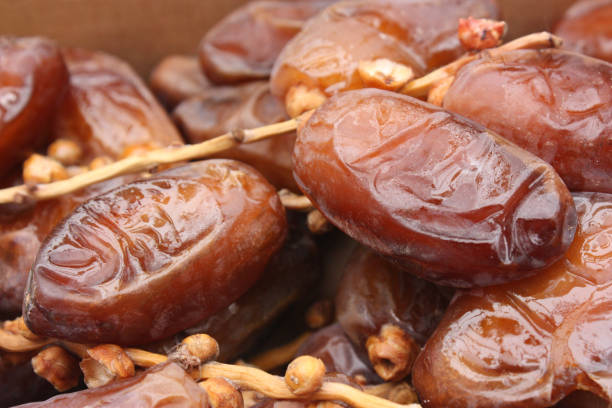
Kurma tangkai — dates still attached to the bunch stem, rather than stripped loose — cost more per kilogram than the same fruit sold separated. Buyers often ask why. The answer has less to do with the dates themselves and more with how much handling a bunch survives between the palm and the shelf.
A loose date has already been through a sorter, a grader, and usually a hand-sort for size. A tangkai bunch skips most of that. It travels as one unit, packed in shallow trays or boxes that keep the stem rigid so the fruit doesn't bruise against its neighbours. That lower-touch handling is exactly what makes kurma tangkai a different product to source than a carton of loose Ajwa or Mariami — it needs its own packing line, and it can't be palletised as densely, so freight cost per kilogram runs higher too.
Grading a bunch is different from grading loose fruit
Loose dates get graded fruit by fruit: size, moisture, colour, skin condition. A tangkai bunch is graded as a unit first — how evenly the fruit has ripened along the stem, whether any dates near the base have split or dried out ahead of the rest — and only then inspected fruit by fruit. A bunch with three or four underripe dates at one end is usually downgraded even if the rest is perfect, because it won't display well. This is one reason suppliers who deal in both formats keep separate sorting stations for tangkai stock rather than running it through the same line as loose fruit.
Storage life is shorter too. A bunch left at room temperature ages faster than loose dates of the same variety, because the stem keeps drawing a small amount of moisture through the fruit even after harvest. Retailers who stock tangkai for display generally rotate it within a week or two of receiving, rather than holding it the way they might hold a sealed carton of loose dates.
Why the demand spikes around specific weeks, not the whole season
Tangkai sells hardest in the two to three weeks before Ramadan and again just before Eid, when buyers want something to put on a table or hand over as a gift rather than a bag of fruit. Distributors who carry tangkai year-round will tell you the rest of the year is mostly loose-date business; tangkai orders outside those windows are usually for weddings or corporate hampers, not everyday retail.
That narrow demand window is also why tangkai is harder to stock reliably than loose dates. A wholesaler has to commit to a shipment weeks ahead of the peak, knowing the bunches won't last if the timing is off. Get the order in too early and the stock ages out before the rush; too late and the bunches arrive after buyers have already bought their gift stock elsewhere. Pembekal who run this well tend to build the order size around the previous year's actual sell-through, not a guess.
What to check before buying tangkai in bulk
Look at the stem end first, not the fruit. A dry, cracked stem usually means the bunch has been sitting longer than it should have, even if the dates themselves still look plump. Check that the fruit near the base of the bunch matches the ripeness of the fruit near the top — an uneven bunch will finish ripening (or drying out) unevenly on your shelf too. And ask the supplier when the bunch was cut, not just when it was shipped; a bunch cut a week before dispatch behaves very differently from one cut the same day.
For buyers weighing tangkai against loose stock for a Ramadan order, it's worth reading up on the underlying fruit itself as well — the variety used for tangkai affects how it holds up on display just as much as the packing does.