
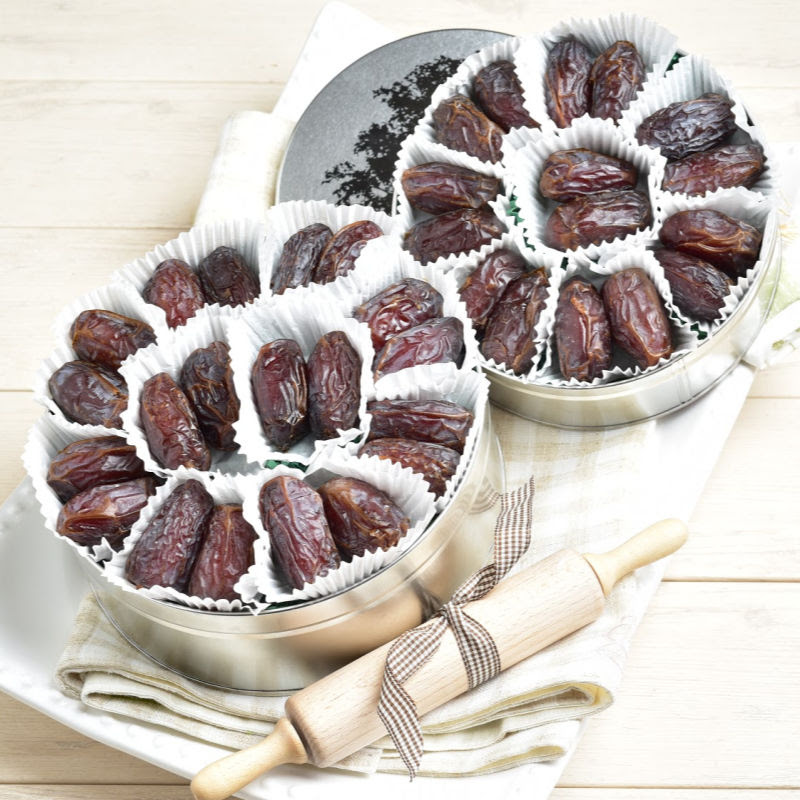
Medjool dates get called the "king of dates" so often it's become a cliché, but the size comparison is real: a good Medjool date can be two to three times the length of a Deglet Noor. Grown mainly in Morocco, Palestine and the US, the fruit is soft almost to the point of being sticky, with a caramel note that comes from higher natural sugar content than most other dried fruit sold in Malaysia. That size and softness is also why Medjool costs more per kilo than the smaller varieties — you're paying for less water loss during drying and a thicker flesh-to-seed ratio.
What actually goes into the price
Grade matters more than most buyers realise. Jumbo-grade Medjool, sorted for size and unbroken skin, sits well above standard grade at retail. Standard grade — smaller, sometimes slightly wrinkled — works fine for baking or blending into smoothies where appearance doesn't matter. If you're buying for hantaran or a gift box, pay for the jumbo grade; if you're buying to eat at home or cook with, standard grade saves money for identical taste.
Medjool next to Malaysia's usual dried fruit lineup
Raisins are the cheapest and most common comparison. They carry less fiber per gram than Medjool and a sharper, more acidic sweetness rather than the caramel flavour. Dried cranberries go the other direction — tart, often sugar-coated to offset that tartness, and lower in natural fiber than dates. Dried apricots land in between: more vitamin A than dates, similar chewiness, but a shorter shelf life once opened. None of these are a straight swap for Medjool in taste; they're different snacks that happen to sit in the same supermarket aisle.
Where dates genuinely pull ahead is in the kitchen. Blend a few Medjool into a food processor with cocoa powder and you get a workable energy-ball base without added sugar. Raisins and cranberries don't do this — they stay too small and don't purée into a paste the way a Medjool's soft flesh does.
Storage: the part most guides skip
Medjool dates don't need refrigeration for short-term storage, but Malaysia's humidity will soften them further and can encourage mould if they're left in an open bowl for more than a week. Keep them in an airtight container; in the fridge they'll hold texture for two to three months, and they freeze well for longer storage without turning mushy on thawing. Raisins and dried cranberries are more forgiving of room-temperature storage since their moisture content is lower to begin with.
Picking between them
If you want a natural sugar substitute for baking, buy standard-grade Medjool — cheaper than jumbo and cooks down the same. If you want a snack that keeps in a desk drawer for weeks without special storage, raisins or dried apricots hold up better. If tartness is what you're after rather than sweetness, cranberries win outright; dates won't scratch that itch. For festive-season buying in particular, jumbo Medjool remains the safer choice since guests notice size and presentation more than they notice fiber content.
See current Medjool pricing by grade or read how Medjool compares against Palestine-origin fruit specifically if you're buying direct from a distributor.