
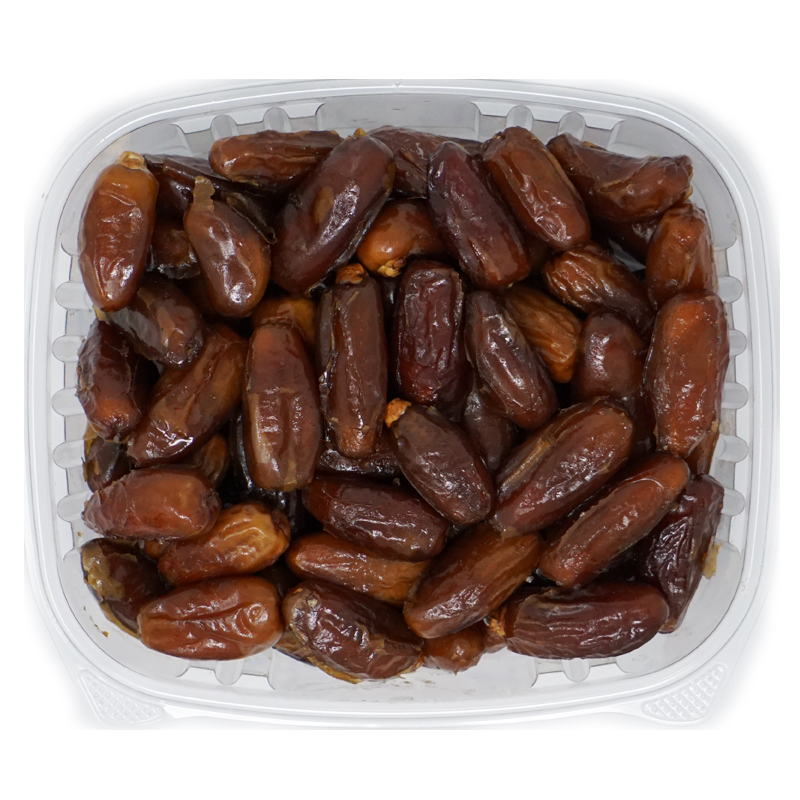
Tangkai dates, explained for the home buyer
"Tangkai" just means the dates still have the stem attached, instead of being stripped off before packing. It sounds like a small detail until you compare two boxes side by side: the stem-on batch keeps its shape and texture far longer than loose fruit poured into the same container. That's the whole reason Kurma Tangkai sells at a different price point from the loose version of the same variety — you're paying for handling, not a different fruit.
Why it lasts longer on the shelf
Dates bruise where they touch each other, and loose fruit tossed into a box touches on every side. Keeping the stem on lets each date hang or sit with less contact, so less bruising happens between the farm and your kitchen. That single difference is why a stem-on batch can sit in a pantry for weeks that would turn a loose batch soft and sticky.
How it actually gets to a Malaysian shelf
Before a batch of tangkai reaches a retailer, it passes through a distributor who checks a few things a home buyer never sees. Are the stems actually intact, or snapped and just sitting loosely in the packaging? Is the moisture level even across the case, or does one side feel drier than the other — a sign the batch wasn't stored evenly before it arrived? And does the paperwork actually match the variety on the label, since a named-origin batch and an unlabelled mixed lot don't belong at the same price. Our notes on how a supplier sources this responsibly cover that sourcing side in more depth.
Buying tangkai for home use
A few checks before you pay for a box:
Look at the stems. They should be firm and attached, not hanging by a thread of dried skin.
Scan for colour consistency. A few pale or shrivelled dates in an otherwise dark, even batch usually means that section sat too long in transit.
Ask how long the batch has been on the shelf, especially if you're buying close to Ramadan or a festive season, when turnover is fastest and stock moves in and out quickly.
Compare the price against loose fruit of the same variety. Tangkai should cost more per kilogram, and that difference should show up as visibly better condition, not just a fancier box.
Storing it once you're home
Keep tangkai in a sealed container away from direct sunlight. It holds its texture at room temperature for longer than loose dates, but it isn't indefinite — once the stem is removed or the pack is opened, treat it the same way you'd treat any soft dried fruit and use it within a few weeks. If you're buying high-quality dates in bulk for a family gathering, split the batch into smaller sealed containers instead of opening the whole box at once — less air exposure means it keeps that stem-on advantage for longer.
For a wider look at how prices shift between varieties and seasons, our guide to wholesale dates pricing in Malaysia goes through the main cost drivers, and if you're weighing up becoming a distributor yourself rather than just a buyer, what to check before signing with a supplier is worth reading first.