
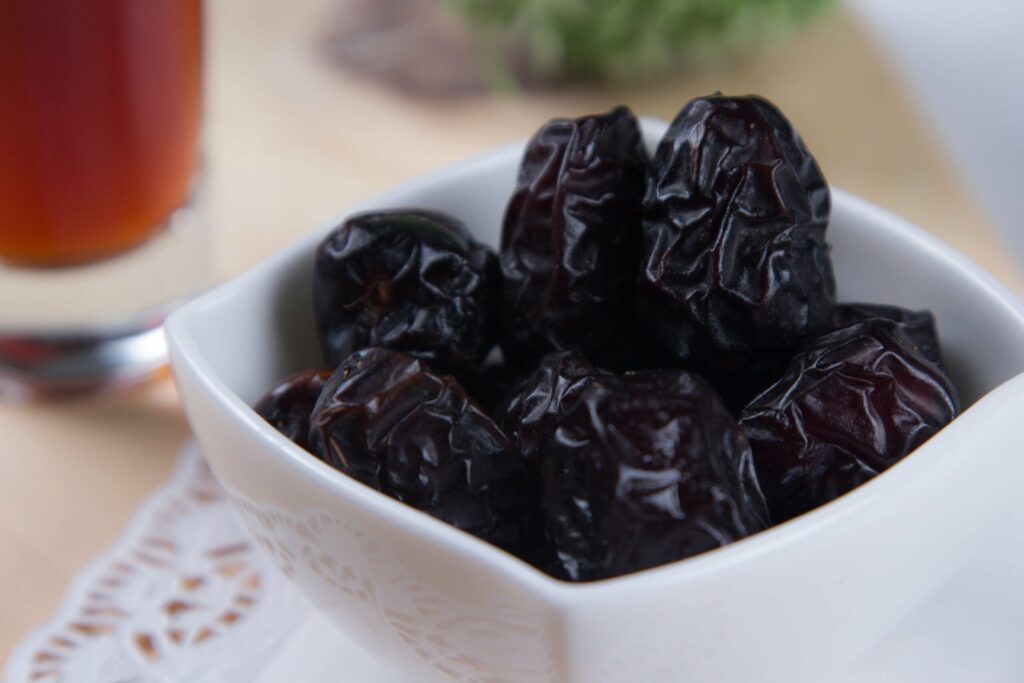
Beyond Medjool: what "rare" actually means for dates
Most shoppers in Malaysia know three names: Medjool, Ajwa, Safawi. That is a tiny slice of what date palms actually produce — growers across the Middle East and North Africa cultivate several hundred named cultivars, and most never leave their home region because they do not travel or store well. A handful do travel, and they are worth knowing if you buy dates regularly rather than once a year for Ramadan.
Four varieties worth seeking out
Khalas, from the eastern UAE and Al Ahsa in Saudi Arabia, is a mid-size amber-to-golden date with a firm, slightly chewy bite and a honey note rather than the deep caramel of Medjool. It is the date Gulf households buy for everyday eating, not gifting, which keeps the price down relative to its quality.
Sukkari comes mainly from the Qassim region of central Saudi Arabia. The name means "sugary" and the dates earn it — pale gold flesh, very soft, almost fudge-like once fully ripe. They bruise easily in transit, which likely limits how often they turn up outside the Gulf compared with Medjool.
Barhi is unusual because it is often sold and eaten at the khalal (yellow, crunchy) stage instead of fully ripe — closer to a crisp fruit than the soft, wrinkled dates most people picture. Left to ripen further it turns amber-brown and syrupy.
Halawy, grown widely in Iraq and parts of the US date belt, is small, golden-brown and very soft with a straightforward sweet flavour — a good entry point if Medjool feels too rich.
Where Kurma Majol still fits
None of this is an argument against Medjool. It remains the reference point for a reason — large, soft, consistent — and it is still the easiest variety to buy reliably in Malaysia. Rarer cultivars are worth trying alongside it, not instead of it; most first-time buyers end up keeping both in rotation once they taste the difference in texture.
What changes the flavour and texture
Three things separate one date cultivar from another: moisture content (soft vs semi-dry vs dry), sugar type (glucose/fructose-dominant tastes different from sucrose-dominant), and harvest stage. A date picked and dried at the tamr stage keeps far longer than one sold fresh at rutab — that is also why semi-dry varieties like Khalas ship better than very soft ones like Sukkari.
Buying rare varieties in Malaysia
Supply is the constraint, not demand. Importers bring in container volumes of Medjool and Safawi because turnover is predictable; a variety like Sukkari arrives in smaller, irregular batches depending on what a grower sends that season. If you want to try one, ask your supplier what is in stock that month rather than searching for a specific name online — availability shifts season to season. For background on how Medjool pricing works in Malaysia and how Safawi compares on taste, see our other guides, or start from the Pengedar Kurma home page for current stock.