
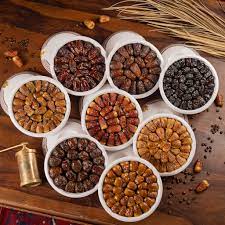
Importir, pengedar, peruncit: three different jobs
People use "date supplier" loosely, but the supply chain has distinct roles. An importir clears the shipment at customs and holds the first stock in-country. A pengedar (distributor) buys from the importir in bulk and moves it out to retailers across a region — it doesn't deal directly with the port, and it doesn't sell single packets to consumers either. Kurma Importir stock typically passes through a pengedar layer before it ever reaches a shop shelf. Confusing these roles is why some buyers expect importir pricing from a pengedar, or expect pengedar-level minimum orders from a retail counter.
Where the margin actually sits
Each layer takes a cut for the service it provides, not just for touching the product. The importir's margin covers customs, freight and the capital tied up while a container clears. The pengedar's margin covers regional warehousing, breaking bulk into smaller lots, and the credit terms it extends to retailers who don't pay upfront. A retailer's margin is the smallest of the three per kilogram, but it turns over the fastest. Squeezing any one layer's margin usually shows up as worse service somewhere else in the chain.
Minimum order quantities and why they exist
A pengedar can't economically break a carton into single-kilogram lots for every buyer — the handling cost eats the margin. That's why minimum order quantities step up by layer: an importir sells by the container or pallet, a pengedar sells by the carton or case, and only the retailer sells by the kilogram. Prices by variety and grade reflect this — a buyer ordering at pengedar-level volume gets a different rate than one buying retail quantities of the same grade.
Restock cadence for a working distributor
A pengedar that restocks too rarely risks running out during a demand spike, like the weeks before a festive season. Restocking too often ties up cash in inventory that isn't moving. Most working distributors track sell-through by variety and reorder specific SKUs, rather than restocking the whole catalogue on a fixed schedule.
What the fruit itself brings to the table
Whatever layer of the chain handles it, the fruit's composition doesn't change. A 100-gram serving carries around 75 grams of carbohydrate and roughly 7 grams of fibre, with about 2 grams of protein and under 1 gram of fat. The vitamin and mineral profile includes B6, niacin, pantothenic acid, vitamin K, potassium, magnesium and copper. Packaging built for wholesale movement protects that composition through each handoff — importir to pengedar to retailer — which is part of why packaging quality is a distribution-layer concern, not just a retail one.
What to check before signing on as a pengedar for a supplier
Ask what minimum order volume locks in your pricing tier, how restocking lead time compares to your own sell-through rate, and whether packaging is rated to survive your specific regional transit — Peninsular routes and East Malaysia routes don't put the same stress on a carton.