
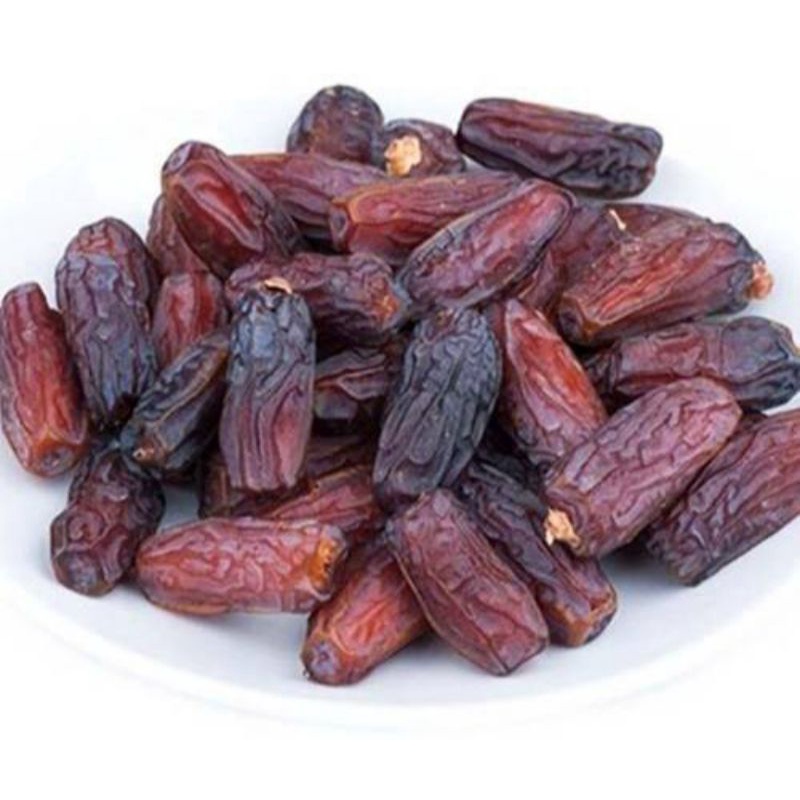
Buah kurma reaches a pengedar in one of two states, and that state decides who it gets sold to next. A fresh or dried dates decision isn't really about taste from where a distributor sits — it's about which downstream customer can actually move the stock before it turns.
Who actually asks for fresh
Hamper assemblers and gift-shop buyers want fresh, rutab-stage kurma in the weeks before Ramadan and Raya — the plumper look and deeper colour photograph better in a hamper box, and the customer paying for a hamper expects that. A kedai runcit ordering for the shelf almost never asks for it. They want a case count they can restock on a fixed schedule without checking dates every visit, and dried is the only format that lets them do that.
The cash-flow difference between the two
Dried kurma can be bought in a bigger batch and held in the warehouse for months — money sits in the stock, but nothing is racing a clock. Fresh has the opposite problem: a pengedar has maybe a week or two to move it on before quality drops, so the batch either sells through fast or it's a write-off. Before taking on a fresh line at all, it's worth reading what to check on a supplier before becoming their distributor — a supplier who can't confirm harvest dates or ship on short notice turns that one-to-two-week window into an even tighter one.
Whose problem it becomes when it doesn't sell
With dried stock, a slow-moving case is just capital tied up a little longer. With fresh stock, unsold cases sitting past their window become a dispute — does the retail customer return it, does the pengedar absorb the loss, or does it get pushed back up to the original supplier? That question needs an answer before the first order ships, not after a spoiled batch shows up. It's the same pass-through liability covered in our note on a supplier's customer service and where a distributor's exposure sits, and it's a bigger part of the job than most new distributors expect — see our wider look at the role dates distributors actually play in Malaysia.
A simple stocking rule
Carry dried as the default line every retail customer can order year-round. Only bring in fresh against a confirmed order — a hamper contract, a festive pre-booking — never as buffer stock sitting on the shelf hoping for a buyer. Quote the two separately too; dried and fresh don't compare on the same per-kilogram number once drying has removed the water weight, which the date prices and grading systems guide breaks down in more detail.