
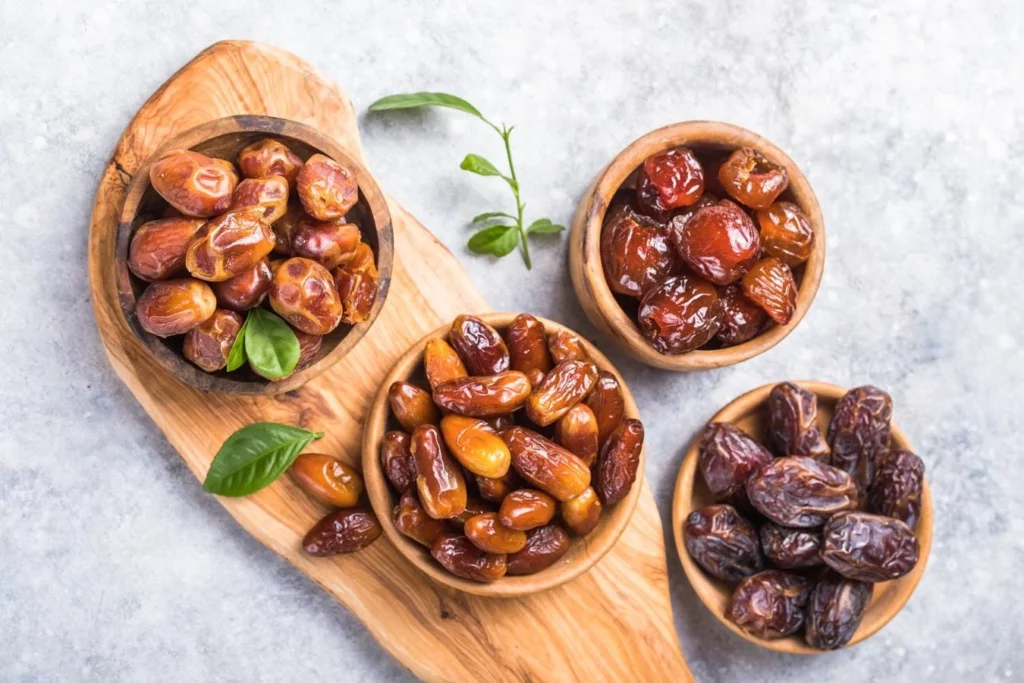
Kurma is dried date fruit, and the reason it turns up in lunchboxes and gym bags across Malaysia comes down to one plain fact: it is mostly natural sugar (glucose and fructose) held together with fibre and a little potassium. That combination is what people mean when they call a date an "energy" food — not a supplement claim, just how the fruit is built. Kurma Malaysia buyers who switch from a chocolate bar to two or three dates in the afternoon are usually chasing that same steady lift, without the wrapper.
Why dates feel different from a candy bar
A candy bar is refined sugar with almost nothing else in it, so it digests fast and the feeling drops off fast too. A date carries roughly 1.5-2g of fibre per fruit alongside its sugar, so the same sugar takes longer to clear the gut. That is the entire mechanism — no extract, no additive, just fruit fibre doing its normal job. It is worth knowing, but it is not a reason to eat unlimited dates; they are still calorie-dense, at roughly 20-25 calories per date depending on the variety.
Not every kurma variety behaves the same way
Ajwa from Madinah is small, dark and dense — closer to a dried fig in texture, and usually the priciest on a Malaysian shelf. Safawi, also from Saudi, is softer and a shade less sweet. Mariami and Piarom from Iran run soft and glossy with a lighter caramel note, and tend to sit at a friendlier price point for daily snacking rather than gifting. If the goal is something to eat through the workday rather than save for hari raya hampers, Mariami or a mid-grade Safawi is the more practical buy than a jumbo Ajwa.
Reading a Malaysian kurma price tag
Grade matters more than brand name on price. Gred A dates run cheaper per kilo than Gred AA or AAA, mainly because size and blemish tolerance are stricter at the top grades — the sugar and fibre content barely changes between grades. For everyday use, buying Gred A in a 500g or 1kg pack usually works out cheaper per date than a small gift box of AAA. Cultivation and handling costs also feed into that price, since a date that travels from Madinah or Bam to a Malaysian shelf has already gone through sorting, fumigation clearance and cold storage before it reaches a supplier.
Storing kurma so it keeps its texture
Dates left in a hot Malaysian kitchen dry out and turn sugary-crusted within weeks. Kept in an airtight container in the fridge, most varieties hold their soft texture for three to four months; in the freezer, closer to a year. If a batch has already started to crystallise on the surface, it is still fine to eat — that is just the natural sugar surfacing, not spoilage — though the texture will be firmer than fresh stock.
Picking dates for a quick energy snack versus a gift
A snack pack just needs to taste good and travel well — a sealed 250g-500g bag of Safawi or Mariami works for a bag or desk drawer. A hantaran or corporate gift box is a different decision entirely: presentation, gred, and origin (Ajwa or Medjool from Palestine and Jordan carry more weight as gifts) matter more than price per kilo. Suppliers who separate their Medjool stock from everyday Ajwa and Mariami usually make that distinction clear on the price list, which is worth checking before ordering in bulk for an event.
Buying from a Malaysian supplier
Ask what harvest season the stock is from — dates bought right after a fresh shipment (roughly October through January for most Middle Eastern origins) taste noticeably better than stock sitting in a warehouse past its restock window. A supplier who can name the origin and harvest timing, rather than just "premium dates," is usually the one keeping proper stock rotation. For anyone comparing Ajwa specifically, checking two or three suppliers' current batches before committing to a bulk order is the difference between fresh stock and old stock at the same price.